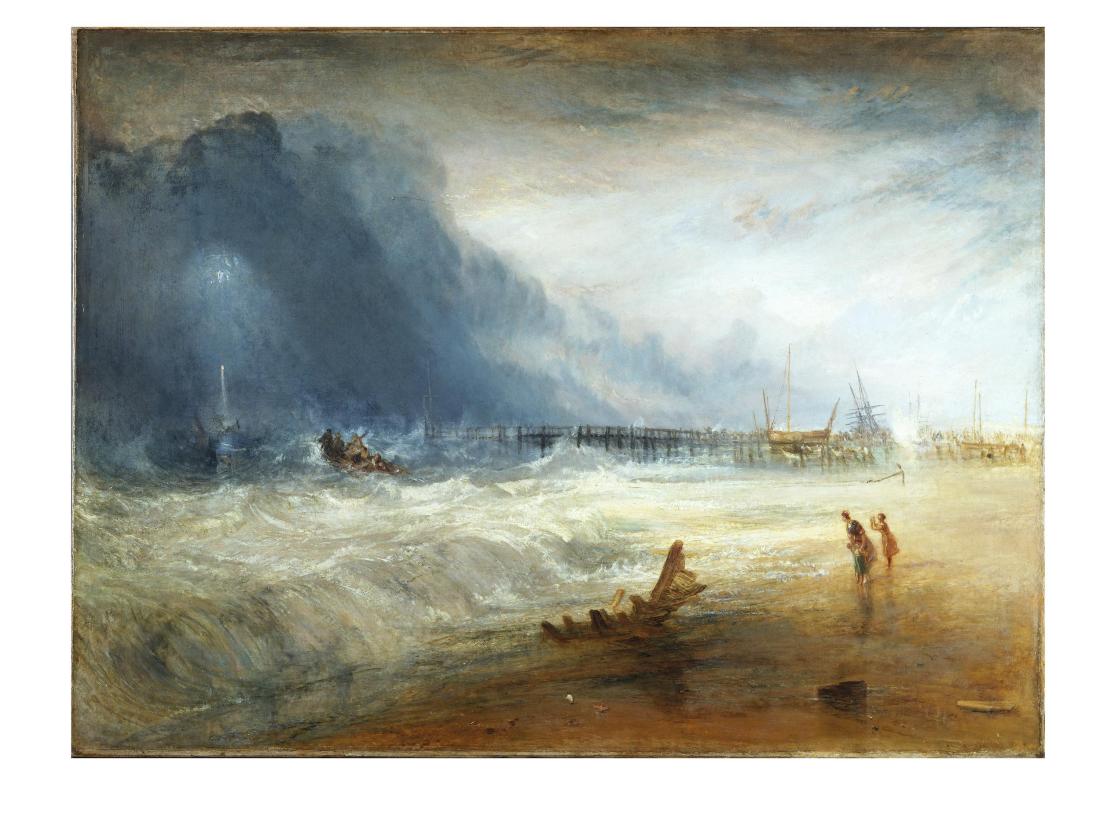
Life-Boat and Manby Apparatus Going Off to a Stranded Vessel Making Signal (Blue Lights) of Distress is a painting by Joseph Mallord William Turner. The title of the painting is very fitting in the sense that it is dramatic and precise in its description, effectively representing the painting. The object of the depiction is the employment of the “Manby Apparatus”, an apparatus that is meant to save wrecked ships in a storm and designed by Captain George Manby after witnessing a storm (Victoria and Albert Museum). The painting is demonstrating man’s fight and bravery in the face of nature’s most brutal attempts of destruction. While Turner is depicting a wonderfully sublime setting, he is also lending a hand to man’s brilliance and invention which leads to it’s ultimate survival against nature.
The painting is supposed to take place at Yarmouth Peer which is coincidentally where Constable has painted the same environment, speculating a certain competition between the two artists (Victoria and Albert Museum). This particular painting exhibits Turner’s fascination with industrialization in contradiction with the sublime–are man’s developments a match for nature? In this painting, Turner is exploring man versus nature through the use of color and composition. The dark colors can represent the sublime taking over, while the use of light on the right side of the canvas can represent hope and prosperity. The use of light directs our eye towards the figures on the beach who appear to be pointing and yelling in the direction of the crashed ship. Bright color and light guide our eye while also communicating a symbolic meaning of human prosperity.
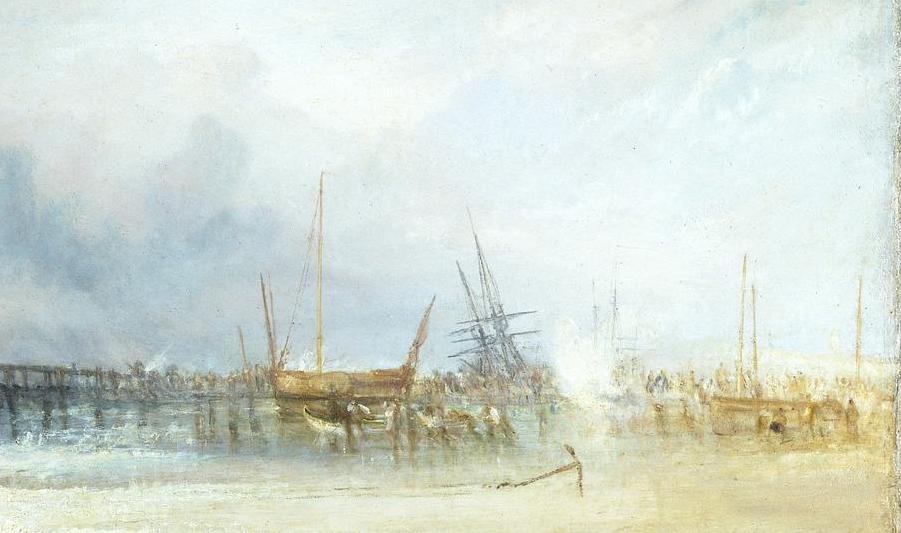
Not only does the environment suggest kinetic and potential motion due to the literal subject of waves, but the ship’s masts are sitting on a diagonal line of sight, implying that the boats are moving back and forth with the waves. The boat that is deploying to save the shipwrecked is also placed on a diagonal as it is depicted on the upside of a wave. The color of the clouds and beach are chosen to accurately represent distance in the painting. In the foreground is the beach, painted in a warm red and suggesting closeness to the viewer. In the back of the painting, the water appears a dark blue which not only suggests distance but presents the tone of danger.
If one has ever been stuck in a storm while stranded on a boat…they will recognize the immediate dread the picture provokes from the storm cloud on the left. Even if one is fortunate enough to not have this experience, a trip to the beach during a storm will do the trick. As someone who has been caught in a storm with no sight of shore–the painting does a wonderful job of capturing how naturally unequipped humans are for nature’s strength.
While Turner’s message is that man’s cleverness will fight for it’s survival against nature, he does not downplay nature’s power. The painting does not provide a clear “who won”, as the storm looks like it does have a good chance at swallowing it’s patrons. However, while the storm looks that fierce, it shows that humans are not discouraged by the possible treachery and constantly prevail with their advancements in technology.

 British Art